Referring a patient for apheresis
For cardiologists, lipidologists, and primary care physicians managing patients who remain above goal on maximum tolerated therapy.
Selective removal of apoB-containing lipoproteins.
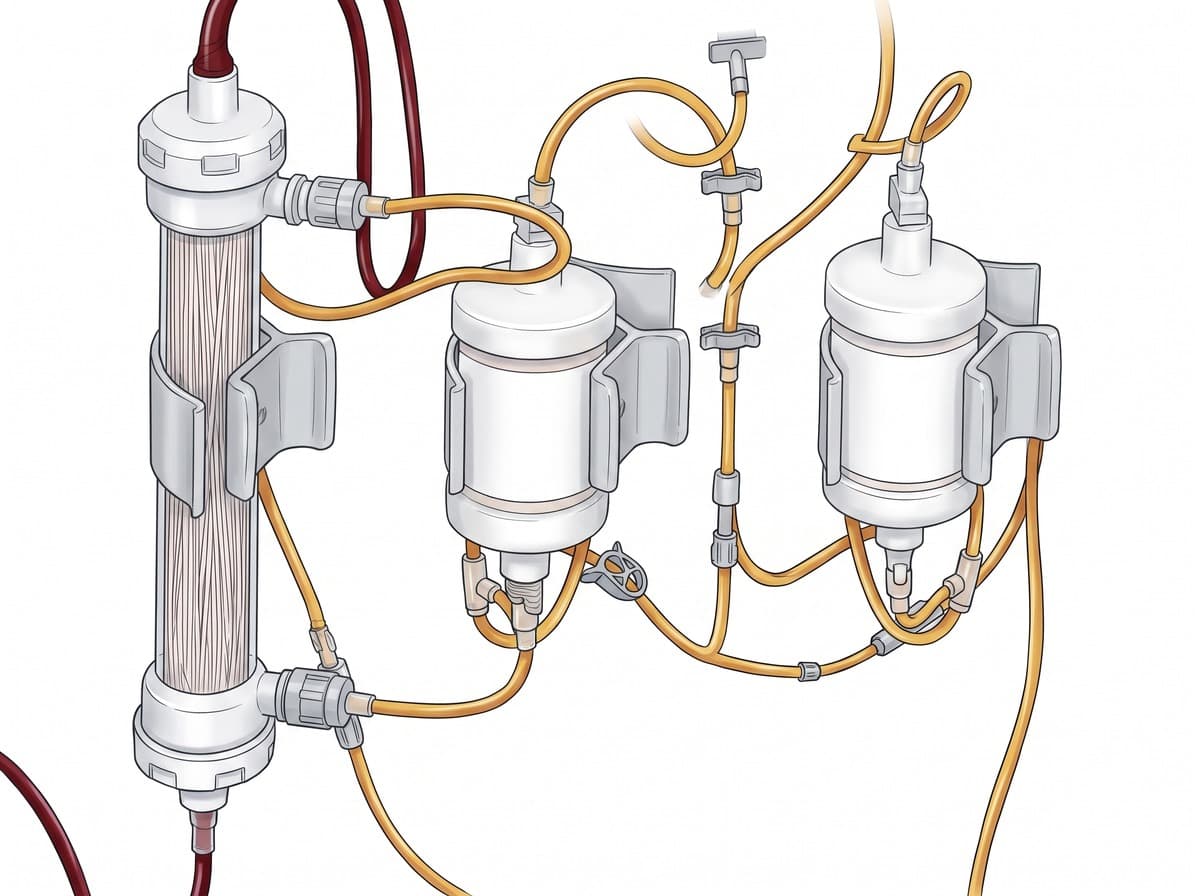
Lipoprotein apheresis extracorporeally removes Lp(a), LDL-C, and ApoB with an acute reduction of approximately 65–85% per session. HDL, immunoglobulins, and cellular components are largely preserved. Treatment is typically performed every one to two weeks. Observational cohorts have reported substantial reductions in major adverse cardiovascular events among patients with elevated Lp(a) and progressive disease.
The four indicated groups.
Indicated for patients with familial hypercholesterolemia for whom diet has been ineffective and maximum drug therapy has been either ineffective or not tolerated.
| Group A · Homozygous FH | LDL-C greater than 500 mg/dL |
|---|---|
| Group B · Heterozygous FH | LDL-C ≥ 300 mg/dL |
| Group C · Heterozygous FH with vascular disease | LDL-C ≥ 70 mg/dL with documented coronary artery disease or documented peripheral artery disease |
| Group D · Heterozygous FH with elevated Lp(a) | Lp(a) ≥ 60 mg/dL (130 nmol/L) with documented coronary artery disease or documented peripheral artery disease |
Note that Groups C and D turn on documented vascular disease rather than on a high LDL alone. An FH heterozygote at LDL-C 75 mg/dL with documented CAD or PAD qualifies. Coverage criteria vary by payer; we verify benefits and manage prior authorization for every referral. Call 561-488-5535 to discuss a case near a threshold.
Peripheral artery disease and non-healing wounds.
Documented PAD is a qualifying condition under Groups C and D above, which means a patient with heterozygous FH or elevated Lp(a) and refractory limb ischemia may already meet criteria. For no-option patients facing amputation, this is worth checking before it is too late to matter.
Practical implication: if you have a vascular patient heading toward amputation, an Lp(a) level is worth ordering. It is not on a standard panel, and it can change whether apheresis is available to them.
What we need, and what you get back.
What to send
Recent lipid panel including Lp(a) and ApoB, cardiac history and imaging, current medication list, and prior therapy documentation.
What we manage
Candidacy review, benefits verification, prior authorization, scheduling, and all treatment-day care.
What comes back
A consultation summary, pre- and post-session lipid values, and ongoing progress notes for your records.
Before you refer: ACE inhibitors are contraindicated with the dextran sulfate adsorption columns we use. If you are considering a referral, starting the switch to an ARB or another alternative early, with an appropriate washout before the first session, removes the most common scheduling delay we see.
Call us before you send anything.
A phone call is the fastest route and usually the only one needed. We will tell you on the call whether the patient is likely to meet criteria, which saves you assembling a package for a case that will not qualify.
Boca Raton, FL 33434
Your patient stays yours. We treat; you keep directing care.
Have a patient in mind?
Call and we will talk through the case before you send anything. No formal referral is needed to start.