The genetic cholesterol most people never hear about

What is Lp(a), and why does it matter?

Said "L-P-little-a," it is the hidden, measurable driver of heart disease that diet and statins simply cannot reach.

Lp(a) explained in ninety seconds: what it is, why it is inherited, and what can be done

Lipoprotein(a) is a type of cholesterol particle determined almost entirely by your genetics, not your lifestyle.

Unlike ordinary LDL cholesterol, Lp(a) cannot be meaningfully lowered with statins, diet, or exercise. You can do everything right and still carry a high number, because the level you inherited at birth is largely the level you keep. That is what makes it so easy to miss: a standard cholesterol panel can look reassuring while Lp(a) quietly raises your cardiovascular risk in the background.

Approximately 1 in 5 people has elevated Lp(a), yet most have never been tested for it. If you have a family history of early heart disease and your cholesterol “looks normal,” Lp(a) may be the missing piece of the picture.

Two cholesterol particles side by side. The LDL particle on the left is a plain sphere. The Lp(a) particle on the right is the same sphere with an additional protein strand wrapped around it.LDLLp(a)
Lp(a) is an LDL particle carrying one extra protein. That single addition is what statins cannot reach.
The stakes

What elevated Lp(a) puts at risk

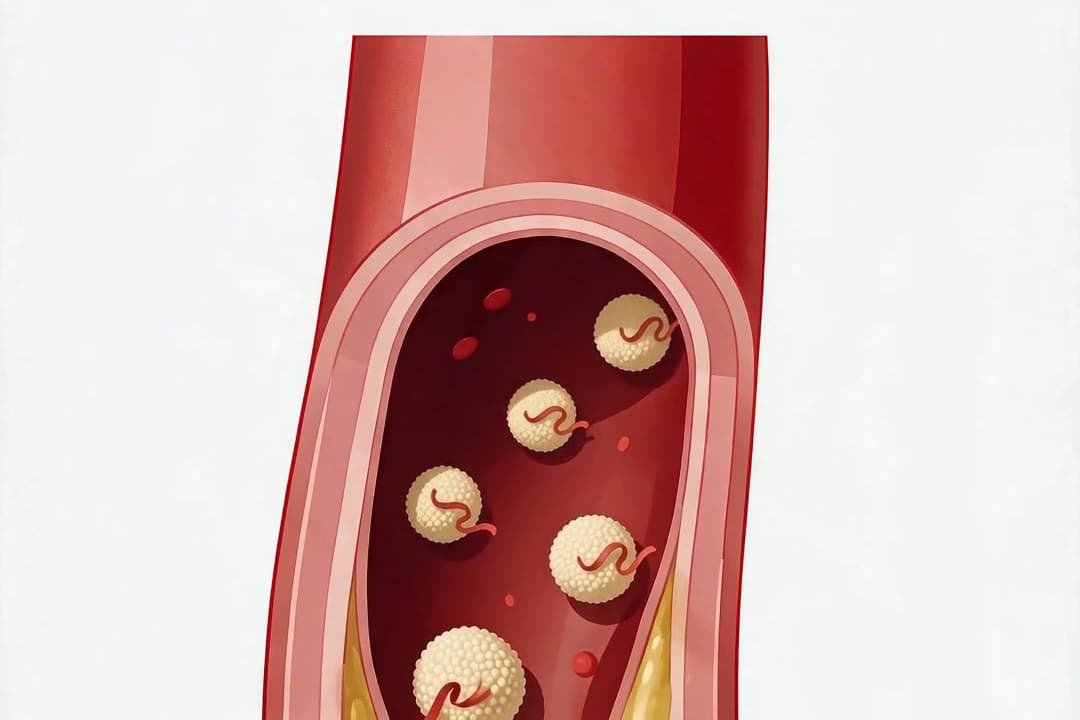
High Lp(a) is independently linked to several of the most serious cardiovascular conditions. It builds plaque faster than ordinary LDL, and it promotes clotting on top of that.

Cross-section of an artery with Lp(a) particles in the bloodstream and plaque building along the vessel wall
RISK 01

Heart attack

Coronary artery disease from accelerated plaque.

RISK 02

Stroke

Clots that interrupt blood flow to the brain.

RISK 03

Peripheral artery disease

Narrowed arteries in the legs and limbs.

RISK 04

Aortic valve disease

Calcific narrowing of the heart's main valve.

When medication can’t lower it, apheresis can physically remove it.
The evidence

What happens to cardiac events.

Four published cohorts, in different countries and different centres, have followed what happens after patients with high Lp(a) start apheresis.

Published cohorts
Pro(a)LiFe170 patients, prospective and multicentre. Lp(a) fell 70%; cardiovascular events fell 78% over the two years on treatment compared with the two years before.
German longitudinal cohort120 patients. Median Lp(a) fell 73%, and the mean annual rate of major adverse coronary events per patient fell 86%.
Dresden apheresis centre59 patients followed for a mean of five years. Lp(a) fell 70% and cardiovascular events fell 83%.
Single-centre retrospective118 patients over nearly seven years. Lp(a) fell 53% and major adverse cardiovascular events fell 80%.
Primary sourceLeebmann J, Roeseler E, Julius U, et al. (Pro(a)LiFe Study Group). Lipoprotein apheresis in patients with maximally tolerated lipid-lowering therapy, lipoprotein(a)-hyperlipoproteinemia, and progressive cardiovascular disease. Circulation. 2013;128:2567–2576. doi:10.1161/CIRCULATIONAHA.113.002432

How do I know my number?

A single blood test. For most people the value stays fairly stable through adult life, so it often only needs measuring once, though it can shift with kidney or thyroid disease, or after menopause. Ask your physician for a lipoprotein(a) test specifically; it is not included in a standard cholesterol panel and has to be ordered on its own.

An illustration of a DNA helix with an Lp(a) particle passing to a woman, showing that the level is inherited
Your level is set by the genes you inherited, not by how you have lived

So what can you do about it?

If your Lp(a) is high and you are already at elevated cardiovascular risk, lipoprotein apheresis offers a way to lower it directly: the treatment filters Lp(a), LDL, and ApoB out of your blood, achieving a 65–85% reduction in a single session.

For patients who qualify, it is performed outpatient and covered by many insurance plans. See how the treatment works →

Begin / consultation

Curious whether your Lp(a) puts you at risk?

We will help you make sense of your labs and family history, and whether apheresis could help.